
The (dis)equation of change will help you find out
What is the secret of a manager who resists change?
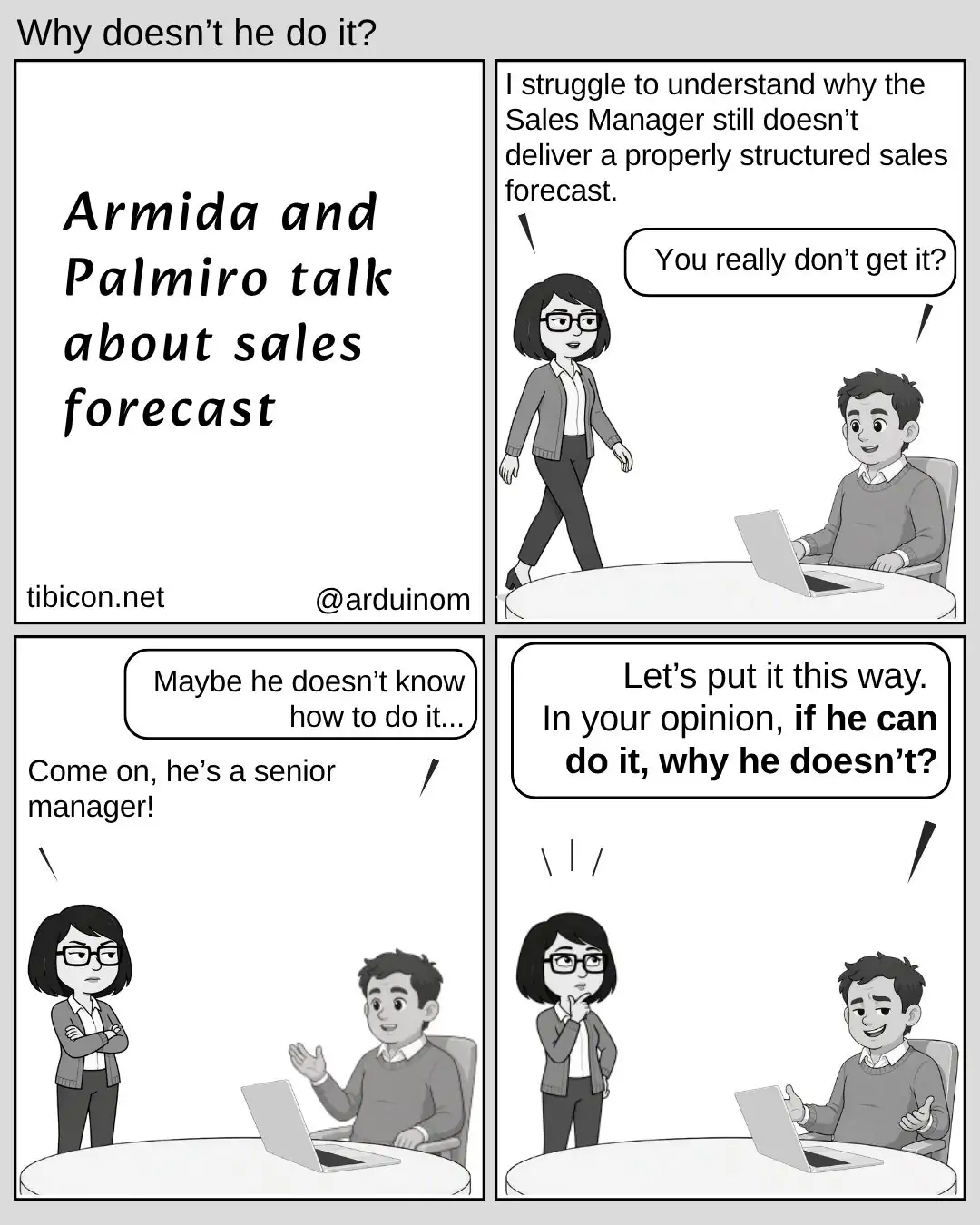
When we talk about resistance to change within an organisation, we generally think about people who cling to the positions they have gained over time in order to secure advantages or privileges of various kinds, often of a purely personal nature; we end up feeling resentment towards these people because we blame their resistance for the failure to implement situations that would benefit everyone.
An example?
Small and medium-sized businesses, in particular, struggle to implement processes that would improve their competitive edge and resilience; the first ones that come to mind are sales process – focusing on forecasting and regular performance reviews – the budget cycle, and the internal projects management (technological upgrades, etc.).
The situation becomes critical when those who should be leading the change are the ones who resist it.
The question is:
why do some managers resist change?
Is it just the defence of their position that paralyses them? Or could there be something else?
To provide an answer that isn’t merely instinctive, I asked for help from the (dis)equation of change – the one developed by Gleicher, Beckhard and Harris – which I have written about in the past, explaining its application in both organisational and sales contexts.
It is based on four factors: dissatisfaction with the current situation, a vision of a desirable future, the first steps to be taken in the short term to achieve that future, and resistance to change.
Here is the change (dis)equation:
D x V x F > R
D = Dissatisfaction with the current situation
V = Vision, a realistic representation of a desirable future
F = First steps, the initial steps to be taken (in the short term) to implement change
R = Resistance to change.
If even one of these variables is zero or if their combined level is insufficient to generate the necessary motivation to change, resistance will not be overcome.
What is the prevailing sentiment in a ‘resistant’ manager when faced with these variables?
Let’s find out.
V – The vision of a competitive and less vulnerable organisation is certainly desirable, as it can guarantee and improve, over time, the solidity of its position and the expected rewards.
D – Dissatisfaction with the current situation can be tolerated, at least until it undermines what has been achieved in the past or even one’s permanence in the company. In short, as long as the ship is floating, why bother?
F – This is where things get difficult. The first steps to be taken in the short term to bring about the required change can, however, be problematic, especially when it is necessary to acquire knowledge that takes time to develop.
Let’s take an example.
What does a manager do when he is forced to design and implement sales forecasting processes but doesn’t know how to begin?
How can he guide sales staff who, like him, have no experience in this area or consider the process nothing more than a waste of time?
Does he ask a consultancy firm for help, when he knows that HE should possess the knowledge that is an integral part of his role?
Does he ask his boss, or the Head of Human Resources, for help, admitting his lack of preparation?
It may be a nightmare; to cope with it, all too often the manager ends up keeping quiet and prefers to resist any dangerous temptation:
he/she hides his/her lack of competence
and carries on, doing always the same things.
The defence mechanisms can range from ‘we’ve always done it this way’ to ‘it’s too complicated for us’, perhaps the resistance of the sales team – who ‘would never accept it’ – as a shield.
The lesson to be learnt?
When you see a manager resisting change – from which they might even benefit – you’re rarely dealing with someone defending the status quo; far more often, you’re dealing with someone who lacks the knowledge needed to handle a situation that’s new to him and is afraid of being caught out.
After all, why would anyone choose to avoid dealing with a situation they know they can handle successfully?
What do you think?
If you think you can improve your change management skills, you may be interested in the following coaching programmes:
 (No Ratings Yet)
 Loading...